.svg)


.svg)


A delayed, damaged or stolen shipment rarely costs just the value of the goods on the truck. It can be a production line waiting for one component, a customer’s fixed delivery slot, or a trade show stand that has already been paid for. What a shipment is really worth depends on what happens when it won’t arrive.
This guide is written for anyone shipping goods by road across Europe – from manufacturers and distributors to freight forwarders and logistics providers organising transport for their clients. It explains the risks behind business-critical shipments, what standard carrier liability does and doesn’t cover, and which safeguards actually reduce those risks.
Why one shipment can cost more than the cargo itself
The invoice value of the goods is only the direct loss. The indirect costs – downtime, contractual penalties, lost orders, the hours spent on claims – are often much higher, and insurance usually can’t cover them.
These are the four things a business-critical shipment usually protects:
- Production keeps moving. A missing component or spare part can stop an assembly line – yours or your customer’s.
- Supply chains stay on course. Deliveries to retail or industrial customers often have fixed time windows, and a missed slot pushes everything downstream.
- Events go ahead. Exhibition stands, samples and stage equipment are only useful on one specific date.
- Reputation stays intact. One failed delivery to a key customer can outweigh years of reliable service – whether you made the goods or organised the transport.
The risks behind business-critical road freight in Europe
Cargo theft is an organised business
Freight crime is now one of the biggest threats to business resilience in Europe. In the 18 months to 30 June 2026, TAPA EMEA (Transported Asset Protection Association) recorded over 58,000 freight thefts in 101 countries across Europe, the Middle East and Africa. Only 7.8% of these crimes reported a loss value – and that fraction alone added up to more than €1 billion in stolen goods, or an average of around €1.87 million lost every 24 hours. With more than nine in ten cases reporting no value, the real total is far higher. In TAPA EMEA’s monthly data for February 2026, Germany, Italy, Spain, France and the UK recorded the most incidents.
Phantom carriers collect the goods – legally, on paper
Not every theft involves breaking into a truck. Criminal groups increasingly pose as legitimate hauliers, using forged documents, look-alike e-mail domains, fake insurance certificates and counterfeit driver credentials – and simply turn up to collect the load. A joint warning published by the International Union of Marine Insurance (IUMI) and TAPA EMEA in February 2026 cites 88 phantom-carrier cases registered in Germany in the first seven months of 2025, as many as in the whole of the previous year. Any shipper that books trucks ad hoc, without a fixed verification routine, is an easy target.
Subcontracting chains and reloading
When a load is passed from one carrier to another, the shipper loses sight of who actually holds the goods. Every extra handover, hub transfer or co-loaded stop is another opportunity for damage, delay or loss.
The liability gap many shippers overlook
Under the CMR Convention, which governs international road freight in Europe, a carrier’s liability for lost or damaged goods is capped at 8.33 SDR (Special Drawing Rights) per kilogram of gross weight (Article 23). For light, valuable goods such as electronics, optics or spare parts, that limit can be a small fraction of their real value. Compensation for delay is even lower – at the amount of the carriage charges. None of it covers what usually hurts most: a stopped line, a missed contract slot or an empty stand at a trade fair – or even, your reputation.
How we secure business-critical transports at DONE
Every DONE shipment already starts from a solid baseline: 5-step carrier verification, direct delivery without hub transfers, 24/7 Track&Trace with real-time status updates (by e-mail and in DONE Space) and €500k CMR insurance.
For shipments where a delay, theft or damage could cost the customer much more than the cargo itself, we go further. These loads move under DONE Guard – a set of procedures that adds a dedicated vehicle, GPS checks, guarded parking and a strict no-subcontracting rule. You don’t need to be a logistics security expert to benefit: every request is reviewed, and if our system flags a load as sensitive, we tell you why.
Here is how it works in practice, step by step.
1. Order review and AI risk analysis
Before a truck is booked, our AI system reviews your request and the shipment history for signals that the load may need extra protection. It checks details such as the cargo type, sender and receiver, addresses and special instructions. If a signal is found, a Shipping Agent confirms the cargo type, value and requirements with you.
The system acts as a second pair of eyes – the final decision is always made by our team. If no one on your team is dedicated to transport risk, this is the step that catches what is easy to miss.
2. Five-step carrier verification
Five checks are completed before the truck is booked:
- Company and contact identity
- Transport documents
- Carrier insurance
- Cooperation history
- Driver details
Subcontracting is prohibited. This routine is the direct answer to phantom-carrier fraud: the company, the contact person and the driver who turns up at your dock are all checked. It is the same prevention-first approach we applied for a premium goods distributor shipping valuable items across France, Belgium, Germany and Switzerland.
3. Double insurance
These shipments are covered twice: by DONE’s liability insurance (up to €500,000) and by the verified carrier liability insurance. The carrier’s policy is checked before the order is placed.
When the value of the goods requires it, additional cargo insurance of up to €2,000,000 can be added. For high-value, low-weight loads, this is what closes the gap left by the per-kilogram CMR limit.
4. Shipment-specific carrier briefing
Before the truck moves, every required safeguard becomes part of the carrier’s transport order as a written obligation. These include:
- guarded overnight parking, with the vehicle’s rear doors against a wall,
- GPS access for our Track&Trace team,
- routing via main roads,
- no subcontracting, reloading or co-loading.
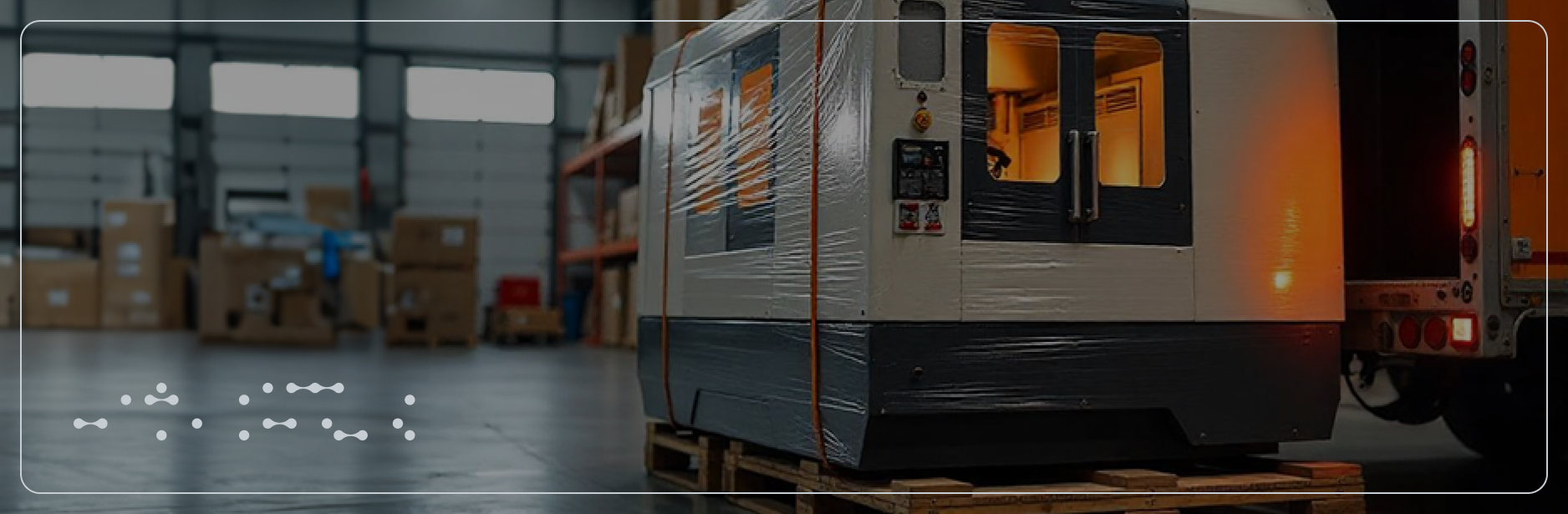
Because the vehicle is dedicated and the delivery is direct, your goods stay on one truck from loading to unloading – the setup that has worked for high-value embroidery machines delivered to textile workshops in France and Belgium.
5. 24/7 Track&Trace
Before loading, the driver is briefed on the transport requirements. Our Track&Trace team then monitors the shipment around the clock, including weekends and holidays, with:
- an evening position check,
- confirmation that the vehicle is using guarded overnight parking,
- contact with the driver 2–4 hours before unloading,
- route-deviation alerts.
This visibility means that if anything changes, you hear about it early enough to inform your customer, re-plan a production shift or adjust an event set-up. It is the kind of continuous supervision behind secure, controlled shipments of precision electronics in France and Europe.
The result across DONE shipments: 98.2% on-time delivery and 99.95% damage-free.
Which shipments need extra protection?
Extra protection is not reserved for luxury goods. Any route can carry a business-critical load. Typical cases include:
- Components and spare parts that keep a production line running.
- Electronics, optics and other compact, high-value goods, where value per kilogram far exceeds standard CMR liability.
- Exhibition stands, samples and event equipment that must arrive before a fixed opening date.
- Premium and branded products that are attractive to thieves and easy to resell.
- Prototypes and one-off items that cannot be replaced quickly.
- Deliveries to key accounts with fixed time slots or penalty clauses.
Checklist: what to share when you request a quote for a sensitive shipment
The more context you give your transport provider, the more accurately safeguards can be matched to the real risk. When you send a request, include:
- What the cargo is – the actual goods, not just “4 pallets”.
- The approximate value of the goods.
- The deadline and what depends on it – a production start, an event opening, a contractual delivery slot.
- Sender and receiver details, loading and unloading addresses and opening hours.
- Special instructions – handling, site access, unloading equipment.
- Whether you need cargo insurance above the standard cover.
FAQ: cargo security in road transport
How can I prevent cargo theft during road transport?
Most theft prevention happens before the truck arrives. Verify the carrier’s company, contact person and driver before every order; avoid subcontracting chains and hub transfers; require guarded overnight parking and routing via main roads; and track the vehicle with alerts for unplanned stops or route deviations. Share details about the value of the cargo only with the people who need them.
What is a phantom carrier and how do I spot one?
A phantom (or fake) carrier is a fraudster posing as a legitimate haulier to collect a load and disappear with it. Typical warning signs are an e-mail domain that differs slightly from the real company’s, a price well below the market, a last-minute change of truck or driver, and documents or insurance certificates that don’t match the company details. IUMI and TAPA EMEA recommend verifying e-mail addresses and phone numbers before every transport order, even with carriers you already work with.
How much is a carrier liable for under the CMR Convention?
For loss or damage, CMR liability is limited to 8.33 SDR per kilogram of gross weight of the missing or damaged goods (Article 23). For delay, compensation cannot exceed the carriage charges. The limit can be raised only in specific cases – for example, when a higher value or a special interest in delivery is declared in the consignment note against an agreed surcharge (Articles 24 and 26), or in cases of wilful misconduct (Article 29).
What is the difference between CMR insurance and cargo insurance?
CMR insurance covers the carrier’s liability – it pays only when the carrier is legally liable, and only up to the CMR limits. Cargo insurance protects the owner of the goods and can cover their actual value, depending on the policy terms. For high-value, low-weight shipments, CMR cover alone often leaves a gap, which is why additional cargo insurance is worth considering.
Should valuable goods travel on a dedicated truck or in groupage?
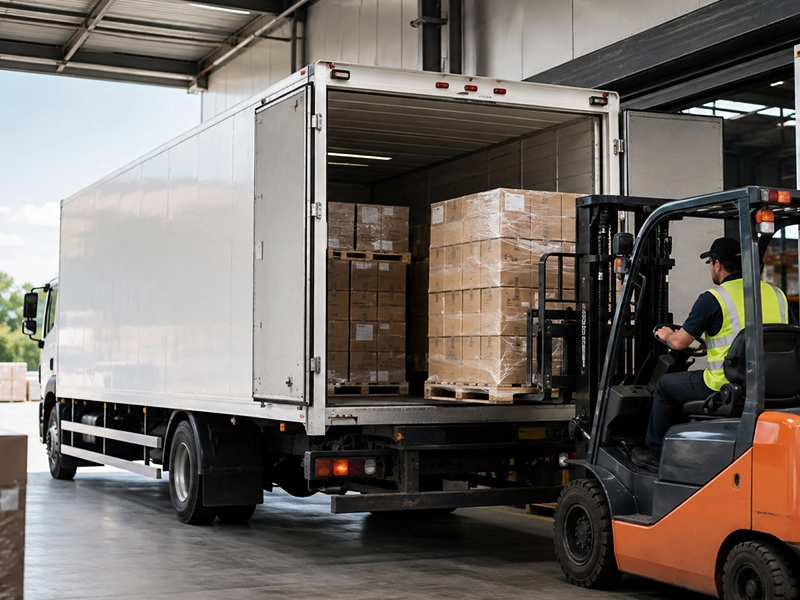
Groupage is cost-efficient, but the load is usually handled at hubs and shares space with other customers’ goods, which adds handovers and touchpoints. A dedicated vehicle with direct delivery keeps the goods on one truck from loading to unloading – fewer opportunities for damage, loss or delay, and clearer responsibility if something goes wrong.
Sources:
- TAPA EMEA, freight crime figures for the 18 months to 30 June 2026, association overview
- IUMI & TAPA EMEA, joint warning on fake carrier fraud and cargo crime risks, 3 February 2026
- Trans.info, TAPA EMEA cargo theft figures for February 2026, 1 May 2026
- UNECE, Convention on the Contract for the International Carriage of Goods by Road (CMR), Articles 23, 24, 26 and 29
Quote and book your transport across Europe


This route is currently inaccessible.
Unfortunately, our fleet does not run on some routes. To continue placing a transport order, please select another route.
Something went wrong...
Refresh the page and try again. If the problem persists, please contact us.


.webp)